
After a day spent among the trails of the Capoliveri Bike Park or along golden beaches, there is no better way to regenerate than discovering Elba’s rich local gastronomy. The island’s cuisine is a living story that speaks of fishermen, farmers, and miners who, over the centuries, have known how to transform simple ingredients into masterpieces of taste. Restaurants proposing typical Elban cuisine today reinterpret this heritage, combining the freshness of the Tyrrhenian Sea with the scents of the Mediterranean scrub.
If you are wondering what traditional dishes you should try to truly know the soul of the territory, here are the typical dishes of Elba Island that must absolutely find a place on your table during your stay.
Flavors of the sea and the mine: between soups and oily fish
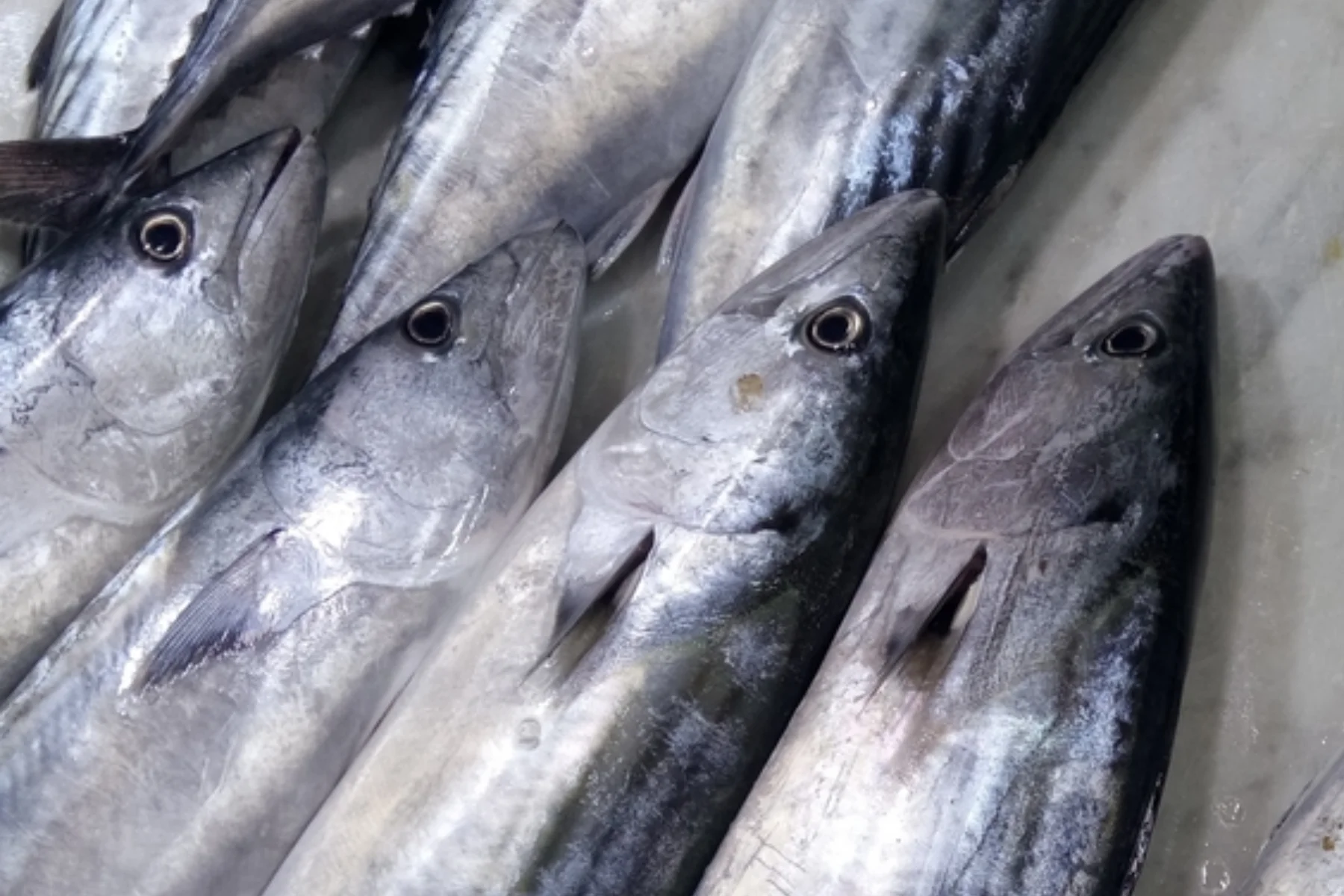
📷 Photo: Karim Haddad /iNaturalist – Palamita (CC BY 4.0)
Elba’s seafood cuisine stands out for its straightforwardness. Historically, premium fish was sold, while locals were left with “poor fish”, which, thanks to wise cooking and natural aromas, gave life to unforgettable courses:
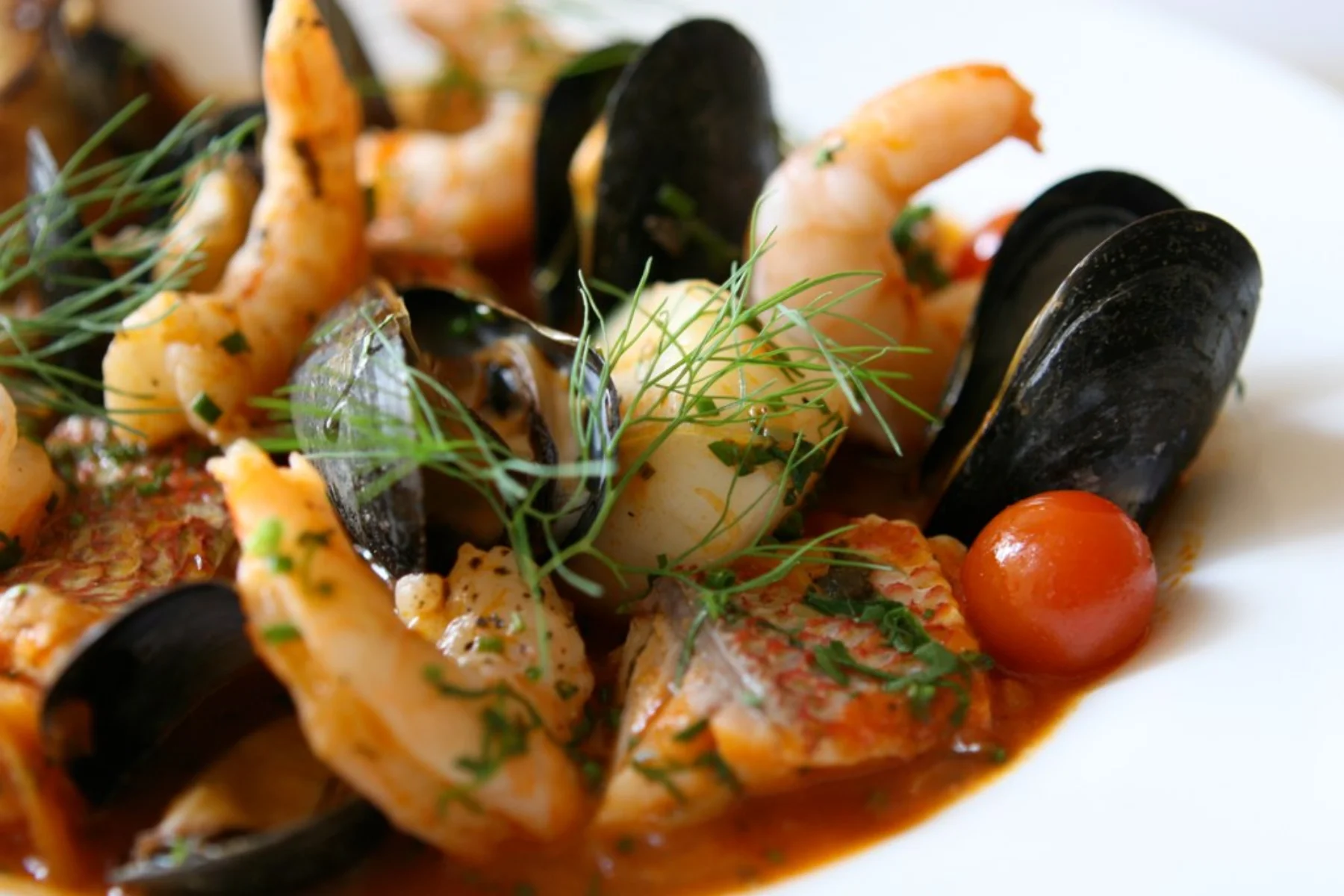
Cacciucco all’elbana: while sharing the name with the famous Livornese stew, the island’s version has its own well-defined identity. It is a less liquid soup, almost a seafood cream, where rockfish, cuttlefish, and octopuses are cooked slowly with tomato and chili. The fundamental difference lies in the choice of local varieties and the more concentrated flavor, strictly served on slices of homemade bread rubbed with garlic.
Stoccafisso alla riese: this dish takes its name from the inhabitants of Rio Marina (the riesi) and is indeed the symbol of this area and the eastern side of the island, historically linked to mining. Miners needed nutritious and long-lasting food: stockfish, enriched with potatoes, tomato, black olives, capers, and a salted anchovy, created a combination of robust flavors perfect to sustain the hardships of mine work.
Palamita (Bonito): undisputed king of local oily fish and today protected as a Slow Food presidio. It is seared on the grill or in oil with aromatic herbs.
The ideal pairing: to enhance these marine flavors, there is no better choice than Ansonica. This white grape variety, with resistant and sugary grapes, yields a structured and savory wine, capable of holding its own even against complex dishes like Cacciucco.
Treasures of the farmer’s hinterland
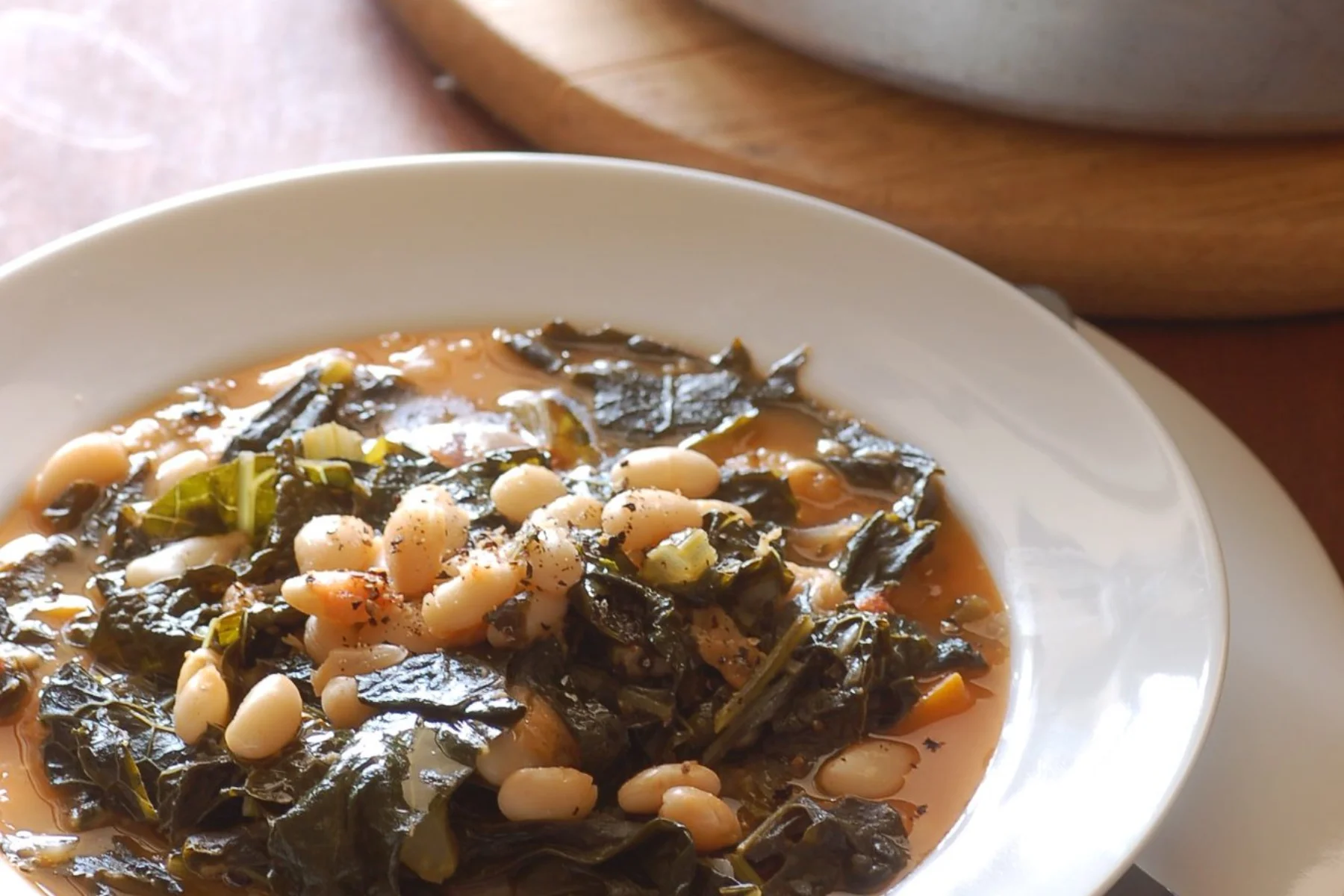
📷 Photo: jules:stonesoup /Flickr – White bean & black cabbage soup (CC BY 2.0)
Elba is not just coast and marine horizons. For centuries, the internal hills and rugged slopes of Monte Capanne guaranteed the survival of local communities thanks to terraced plots, painstakingly carved out of the Mediterranean scrub. These patches of land, kissed by the sun and cooled by the sea breeze, still offer exceptional raw materials today, transformed by popular wisdom into vegetarian dishes of great character and flavor:
Gurguglione: the name itself is onomatopoeic and refers to the sound of the “gurgling” of vegetables cooking slowly in a pan in their own juices. It is a rich and fragrant Elban ratatouille featuring peppers, eggplants, zucchinis, onions, and tomatoes ripened under the island’s intense sun. It is a dish that encapsulates the chromatic and gustatory essence of summer: excellent served hot as a side dish for meat or fish, it becomes absolutely sublime enjoyed cold the next day on rye bread bruschetta. The ideal regenerating meal after a long excursion on the trails.
Imbollita di fichi: this is a sort of dense, sweet-savory flatbread made with extremely ripe black figs, wild fennel, and honey. Historically, it was baked in wood-fired ovens after bread-making and served as an energy reserve for farmers working in the fields. The combination of the sugary sweetness of the fig and the pungent aroma of wild fennel creates a surprising aromatic contrast that takes the palate back to the island’s most archaic roots.
Black cabbage and bean soup: typical of winter and autumn months, this soup represents the most rustic and comforting side of Elba’s local gastronomy. Black cabbage, which grows lushly here assuming a particularly savory flavor thanks to the proximity of the sea, is stewed together with cannellini beans and a chopped mix of aromatic herbs. Served with a drizzle of extra virgin olive oil produced on the island’s terraced olive groves, this soup is not just a nutritious meal, but a ritual celebrating seasonality and the simplicity of poor ingredients transformed into culinary excellence.
Traditional desserts and rituals of love
Elban pastry making consists of dry and resistant sweets, designed to be carried to sea during long fishing trips or into fields during the hardships of grape harvesting and reaping. These are preparations that do not fear the humidity of sea spray or the heat of the sun, lacking perishable ingredients like butter or creams, but making wise use of honey, dried fruit, and liqueur wines. These desserts are steeped in religious and romantic symbolisms, linked to courtship rituals and occurrences of the agricultural calendar that still mark life in the villages today:
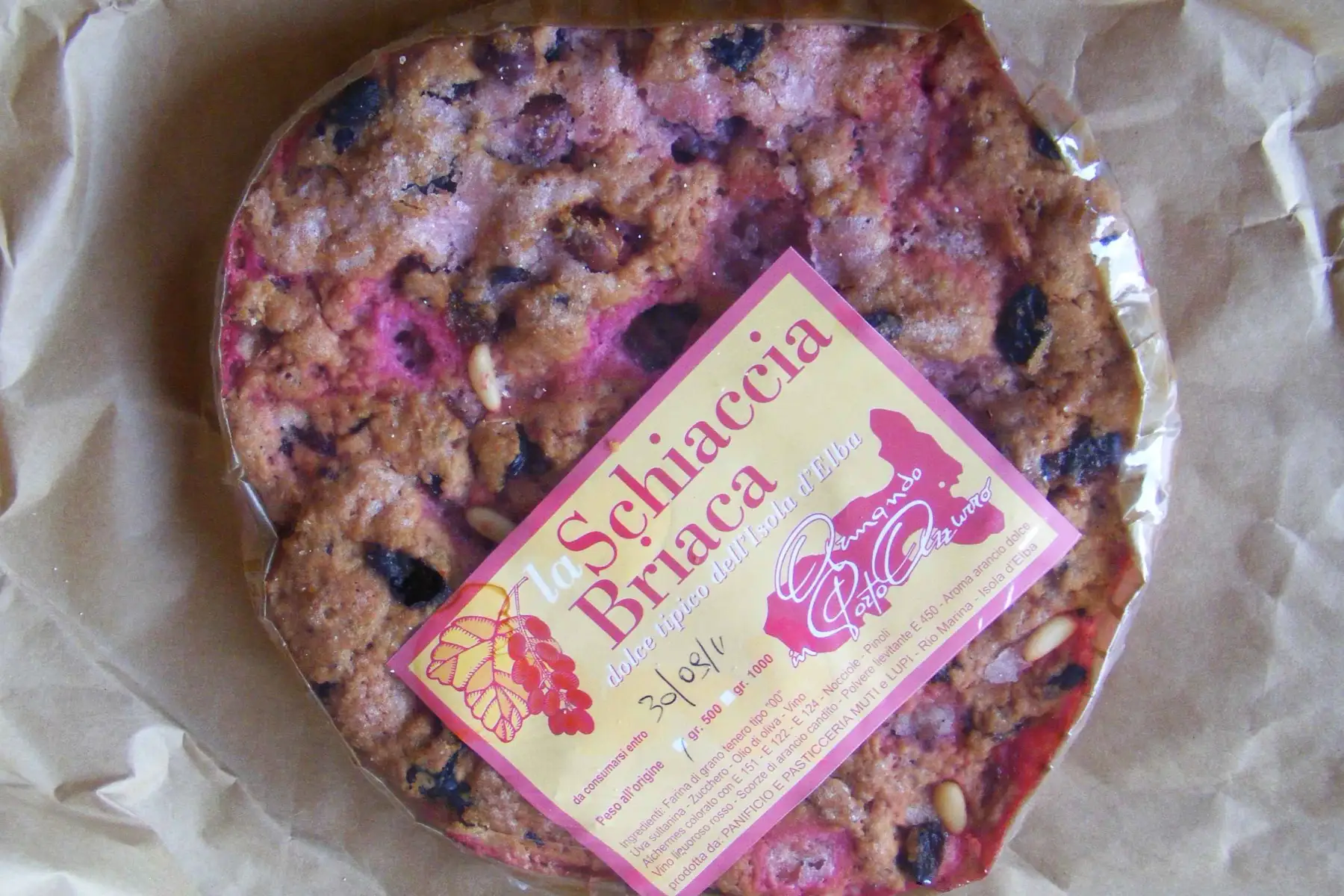
Schiaccia Briaca: the ambassador dessert of Elba in the world. A dry cake, without yeast and without eggs, whose dough is generously enriched with walnuts, pine nuts, and raisins. The secret ingredient giving it its name is Aleatico dell’Elba DOCG, poured into the dough along with alchermes to give it its unmistakable ruby color, fragrance, and a liqueur sweetness that makes this dessert unique and perfect for long preservation.
Sportella dolce elbano: this biscuit made from sweetened shortcrust pastry and decorated with colored sprinkles has a fascinating history. Traditionally, it was given by girls to their loved ones on Palm Sunday ; the man reciprocated on Easter Monday with the “Ceremito”. Even today, the sportella is the sweet that marks the arrival of spring and Easter festivities throughout the island.
A history of excellence: the Elba DOC
Not everyone knows that the bond between the island and wine has deep and officially recognized roots: the Elba DOC has indeed existed since 1967, one of the first in Italy. This recognition protects the quality and origin of wines produced in this unique microclimate, where the minerality of the ferrous soil meets the salinity of the wind. Choosing a certified Elba DOC wine means sipping over half a century of history and territory protection.
Events not to be missed: festivals and gastronomy of Elba
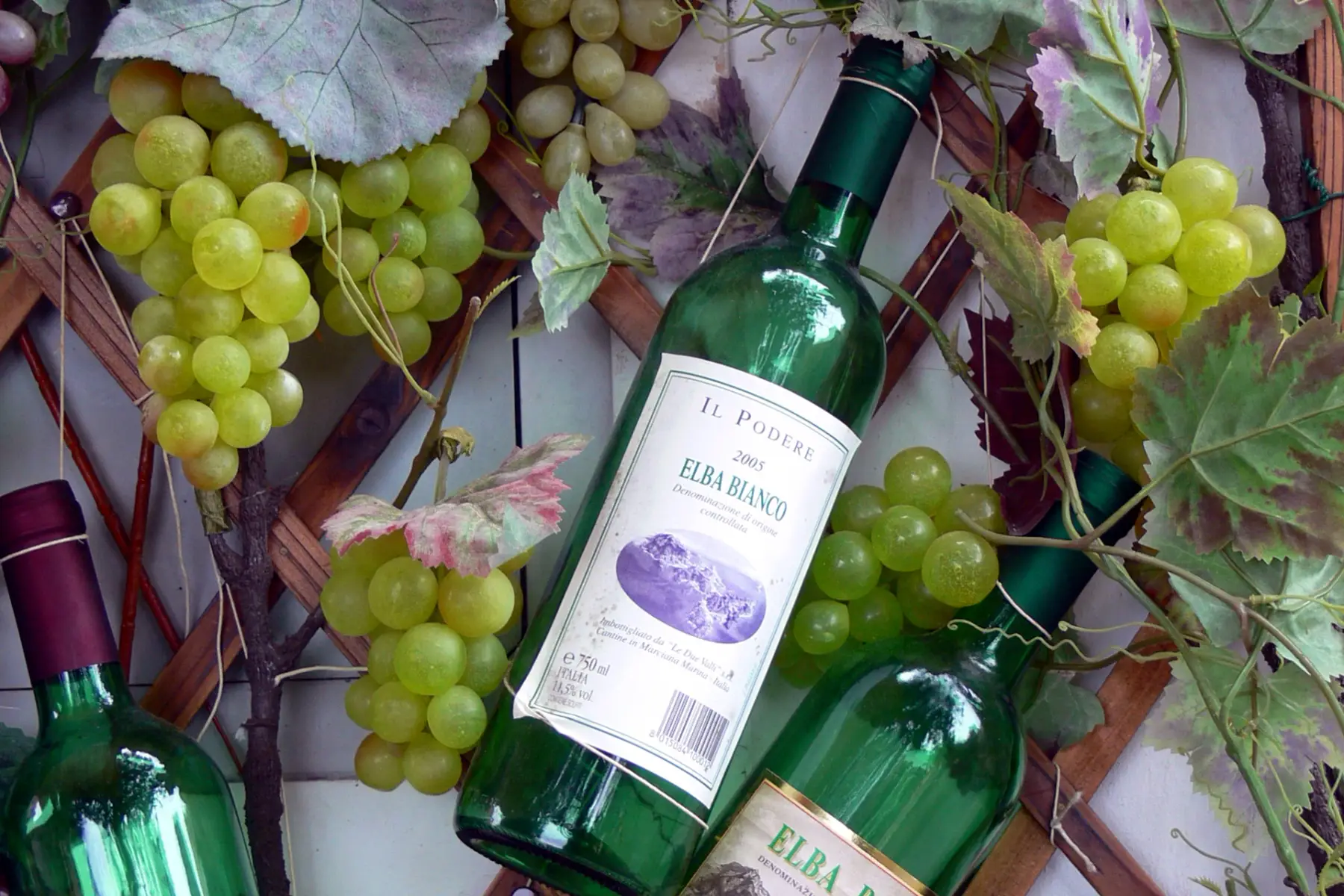
📷 Photo: Wolfgang Sauber /Wikimedia Commons – Marciana Alta – Elbawein (CC BY-SA 3.0)
To authentically experience the local culture, it is worth planning your visit to coincide with the numerous gastronomic events and festivals of Elba. Throughout the year, villages come alive celebrating the products of the land and sea:
The Festa dell’Uva (Grape Festival) in Capoliveri (October): a challenge between neighborhoods that transforms the village into an open-air theater dedicated to the grape harvest.
Autumn chestnut festivals in the hilltop villages of Poggio and Marciana, where you can rediscover the taste of the island’s mountain traditions.
The perfect toast: Aleatico
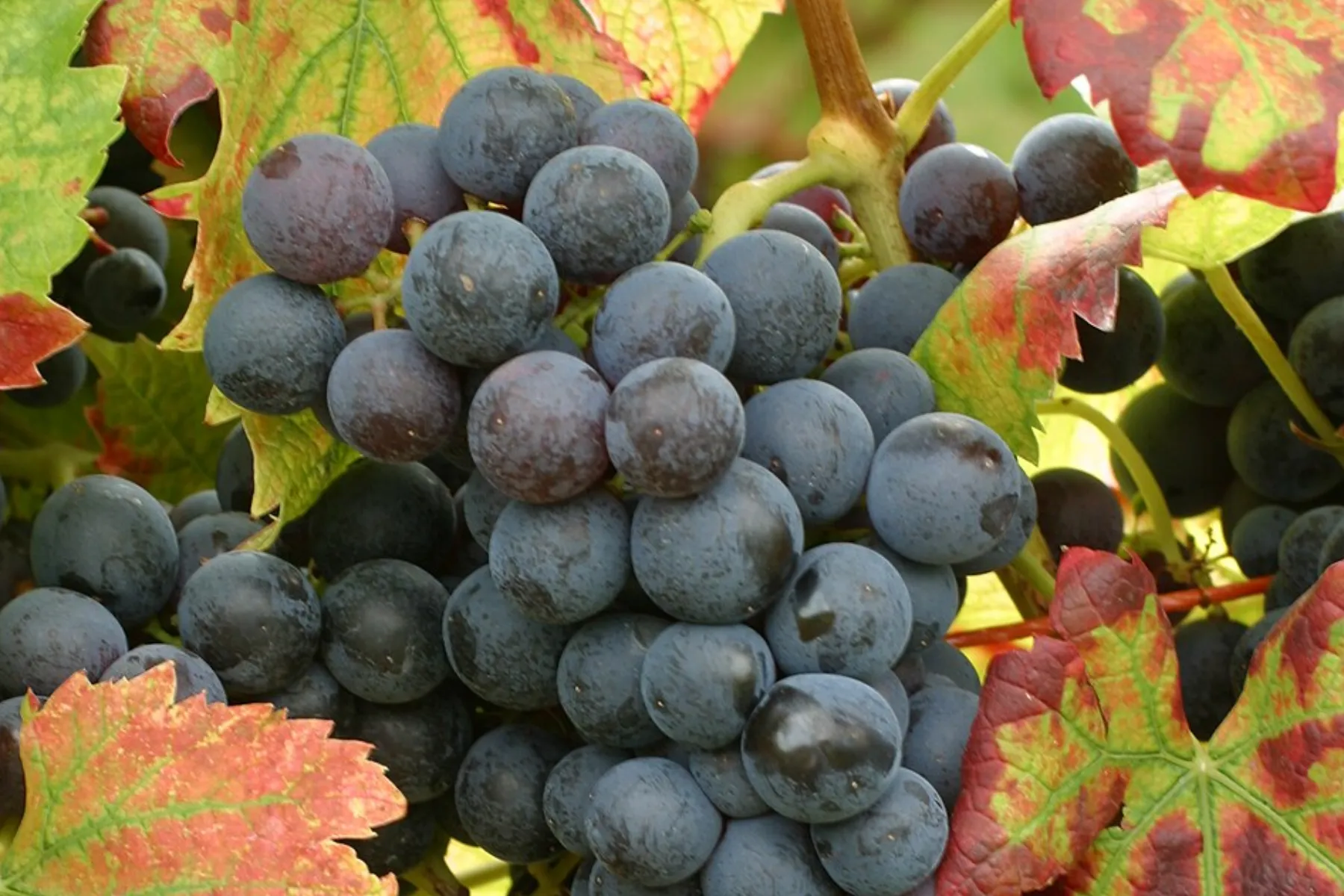
📷 Photo: Doris Schneider, Julius Kühn-Institut (JKI), Federal Research Centre for Cultivated Plants, Institute for Grapevine Breeding Geilweilerhof – 76833 Siebeldingen, GERMANY /Wikimedia Commons – ALEATICO Cluster in the field (CC BY-SA 4.0)
In a territory where land and sea merge in an indissoluble embrace, one cannot speak of the typical dishes of Elba Island without mentioning the ideal companion for the end of any meal: Aleatico dell’Elba DOCG. This passito wine is not just a drink, but the very essence of the island bottled. Produced from native vines that sink their roots into the ferrous, harsh soil kissed by the perennial sun, Aleatico captures every nuance of the landscape.
Elba’s local gastronomy requires time, curiosity, and respect. In the numerous restaurants of typical Elban cuisine, from places hidden among the colorful alleys of Porto Azzurro to historic taverns overlooking medieval squares in Marciana, cool even in high summer, you will always find a story to taste in every dish. Every chef and host guards a family secret, a grandmother’s variation, or a particular combination.
Let yourself be guided by the scents coming from the kitchens; you will discover that the flavor of Elba is a memory that remains impressed in the heart much longer than a simple photograph.
📷 Article cover photo: susan@kingstreetmarketinggroup / Flickr – Charleston Muse Cacciucco (CC BY-SA 2.0)